Projects

Portfolio — 98 Projects by Mahmoud Zalt

Thanks for stopping by. Below is a collection of 98 public projects I've worked on since 2010. Each one was a step in my journey, and every one taught me something new.

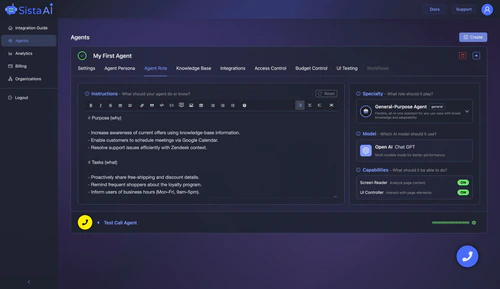
  • AI Agents Workforce (January 2026 – Present) [Enterprise Platform, Agent Orchestration]. An enterprise-grade multi-tenant SaaS platform for deploying and managing AI agents at scale. Agents execute on a durable workflow engine with long-term memory backed by knowledge graphs and vector se... Technologies: Python, LangChain, LangGraph, Django, K6, GraphQL, ReactJS, Tailwind CSS. Visit project
  • AI Knowledge Studio (December 2025 – January 2026) [AI Utility, Analytics]. A natural-language analytics layer that lets teams ask questions over massive metrics data and get accurate, explainable answers in seconds. The system queries both real-time event streams and rela... Technologies: MindsDB, Langfuse, LLaMA, vLLM, Ollama, ClickHouse, PostgreSQL, Kafka.
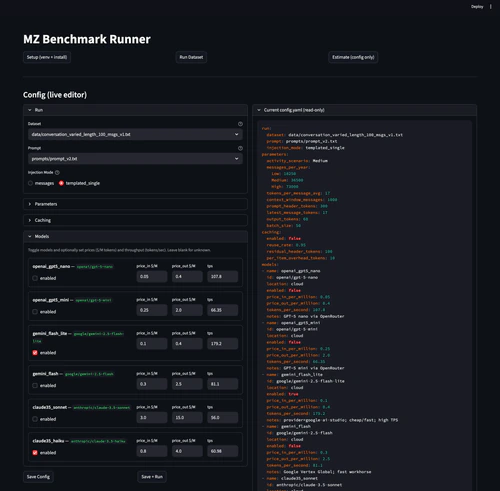
  • LLM Bench Marker (September 2025 – October 2025) [AI Utility]. A benchmarking tool that runs multi‑model sweeps on curated datasets with fixed prompts to identify the best cost/quality trade‑offs. It includes a live config editor with a read‑only YAML preview ... Technologies: OpenRouter, Python, Hugging Face, Git.
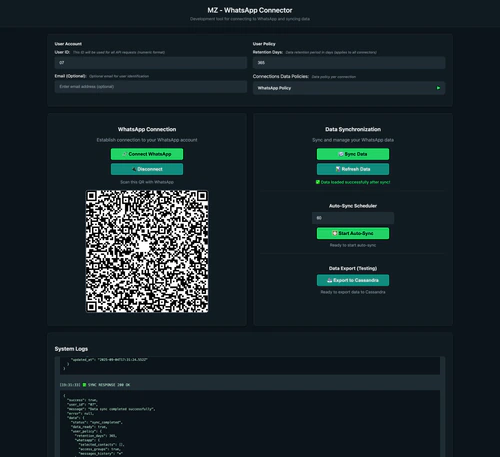
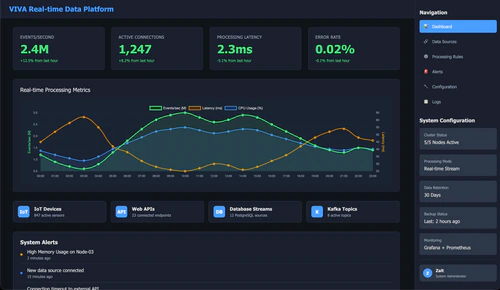
  • ML Data Analytics (August 2025 – November 2025) [Backend Service, API]. A data aggregation API built for enterprise use. Provides real-time data synchronization capabilities and transforms raw inputs into structured analytics layers. Enables operational reporting, patt... Technologies: GoLang, Cassandra, FastAPI, Python, PostgreSQL, Kafka, Grafana, Prometheus.
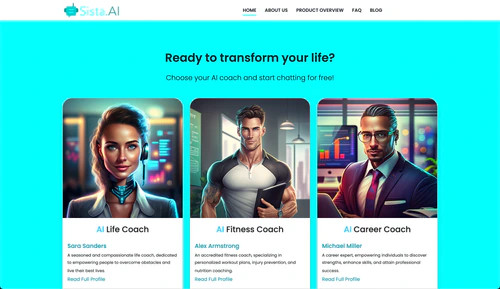
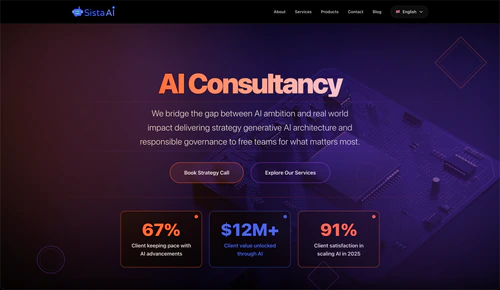
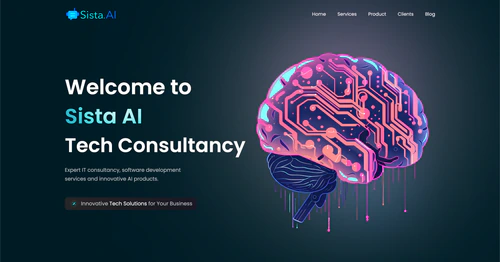
  • AI Coaching Chatbots (January 2023 – September 2023) [AI Chatbots]. This is a personalized coaching service through WhatsApp, transforming how individuals receive guidance and support. By leveraging AI and machine learning, Sista AI delivers expert advice tailored to ... Technologies: NextJS, ExpressJS, Ant Design, OpenAI, TypeScript, Serverless Framework, MongoDB, LlamaIndex. Visit project
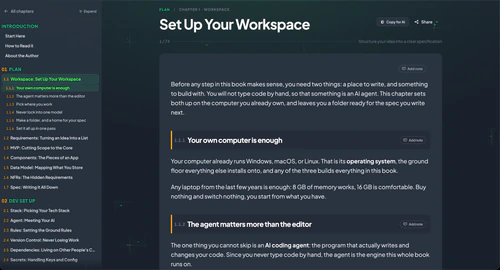
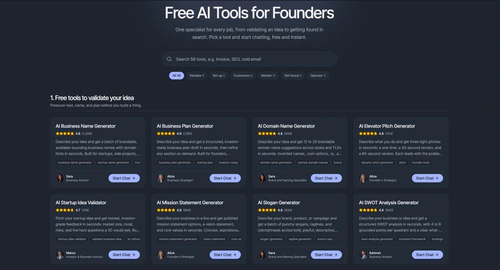
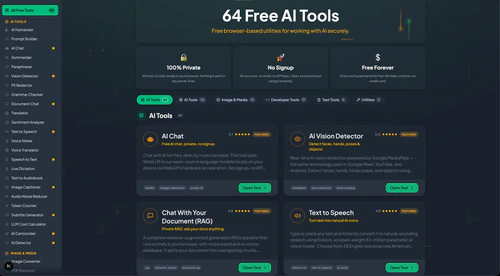
  • AI Utilities Suite (March 2026 – March 2026) [Web App, AI Utility]. A growing collection of privacy-first AI utilities that run entirely in the browser. Every tool processes data client-side — nothing is uploaded, stored, or sent to external servers. Tools include an... Technologies: TypeScript, WebLLM, Whisper, Transformers, WebAssembly, WebGPU. Visit project
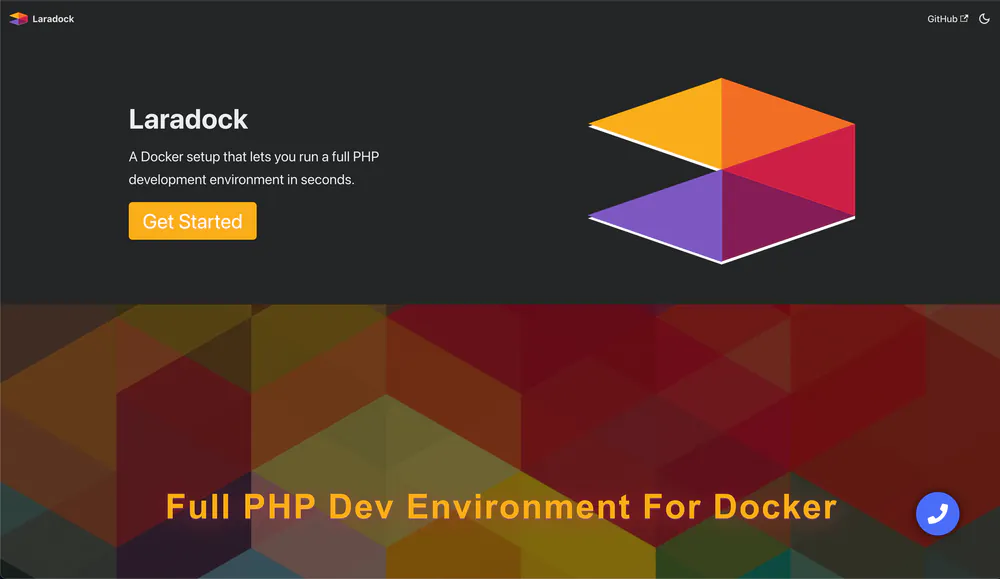
  • Laradock (August 2015 – March 2018) [DevOps Tool, Docs]. Laradock.io is a widely adopted open-source PHP development environment built on Docker. It provides a fully-featured stack with pre-configured services like Nginx, MySQL, Redis, and more; allowing de... Technologies: PHP, Shell, Docker, Docusaurus, Travis CI, ReactJS, TypeScript, HTML. Visit project Source code
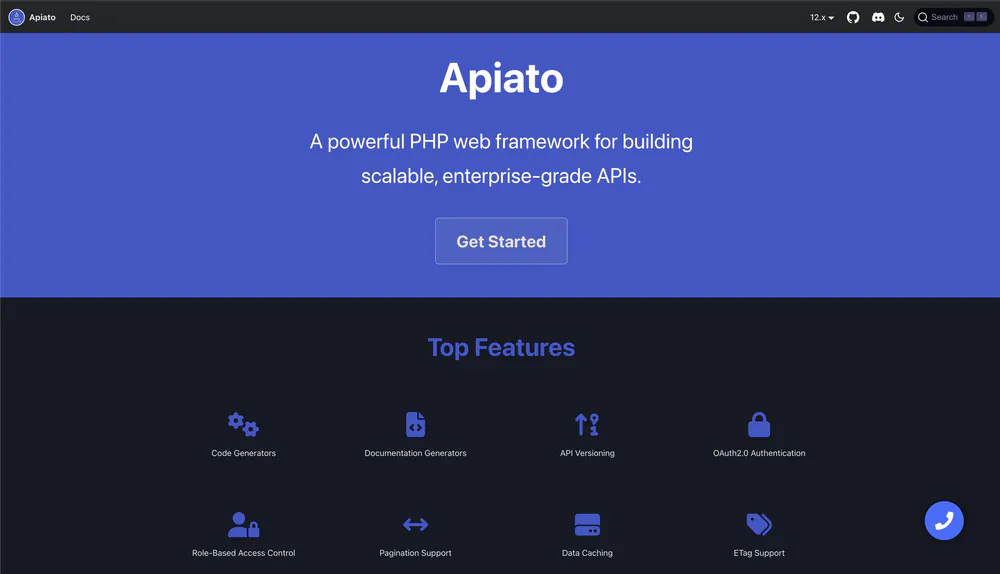
  • Apiato (April 2016 – March 2018) [API Framework, Docs]. Apiato.io is an elegant open-source framework for developing testable API-centric applications with PHP. One of the core strengths of Apiato.io is its development experience. Whether you're buildi... Technologies: Laravel, Docusaurus, ReactJS, PHP, CircleCI, TypeScript, NodeJS, HTML. Visit project Source code
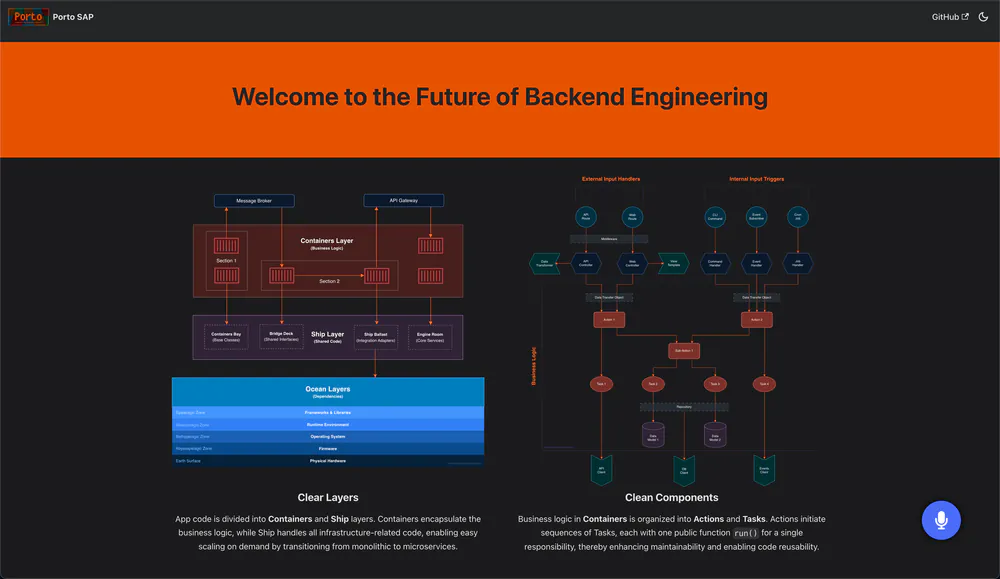
  • Porto SAP (January 2016 – March 2016) [Software Architectural Pattern]. Porto SAP is a modern Software Architectural Pattern, designed to help developers organize their Code in a super maintainable way. It is very helpful for big and long term projects, as they tend to ha... Technologies: Docusaurus, ReactJS, Markdown, TypeScript, Git. Visit project Source code
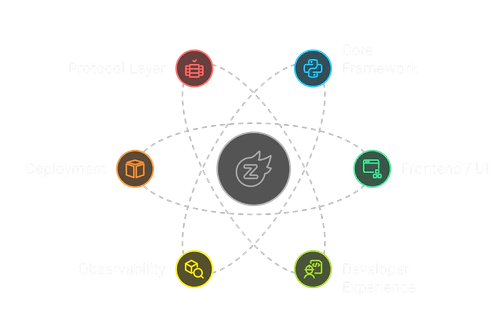
  • Zaltech (December 2025 – Present) [Framework, SDK]. An open-source full-stack framework for building AI-native, cross-provider applications that run across ChatGPT, OpenAI, Gemini, Claude, and future MCP-compatible platforms. It standardizes how you bu... Technologies: Python, FastMCP, FastAPI, Tailwind CSS, Radix UI, ReactJS, TypeScript, Vite. Source code
  • Sista Website v2 (February 2026 – February 2026) [Website]. A complete rebuild of the Sista website with a modern, production-ready architecture and enhanced features. This version represents a significant upgrade in technology stack, developer experience, and... Technologies: NextJS, ReactJS, TypeScript, Tailwind CSS, PostHog, Vitest, Playwright, Storybook. Visit project
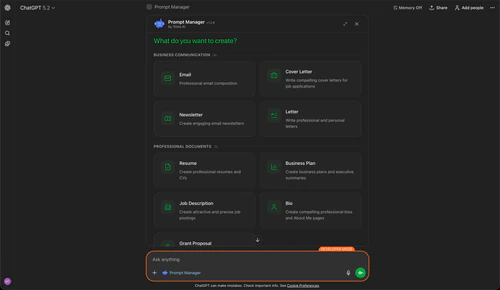
  • AI Prompt Manager (October 2025 – November 2025) [AI Native App, Utility]. An AI-native utility embedded directly inside ChatGPT that helps users turn unclear or incomplete requests into clear, structured instructions before content is generated. It operates within the conve... Technologies: Python, FastMCP, Langfuse, ClickHouse, MCP Inspector, FastAPI, Radix UI, Tailwind CSS. Visit project
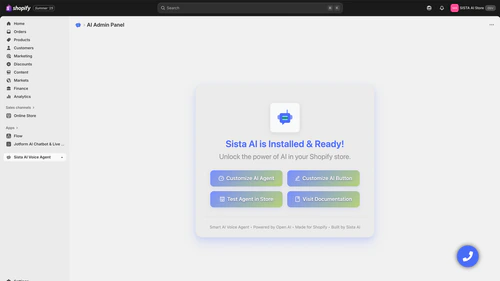
  • AI Sales Agent for Shopify (July 2025 – October 2025) [Shopify App]. An AI-native application that embeds directly into conversational AI platforms (including ChatGPT and others) and acts as a personal assistant within the conversation itself. It operates as an in-chat... Technologies: NextJS, OpenAI, GraphQL, TypeScript, NodeJS, Shopify, ReactJS, PostgreSQL. Visit project
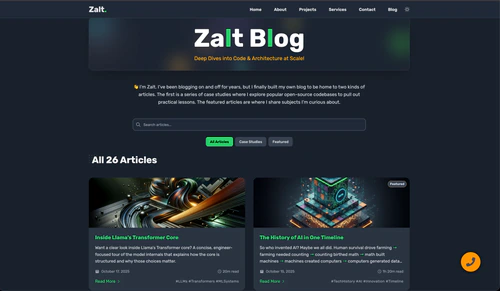
  • Zalt Blog v2 (April 2025 – April 2025) [Website, Blog]. A fully custom blog platform, representing a complete rebuild from the ground up. This version features a minimalist theme, responsive layouts, tagging and categories, code syntax highlighting, searc... Technologies: NextJS, ReactJS, n8n, TypeScript, Markdown, Git, AWS, CloudFlare. Visit project
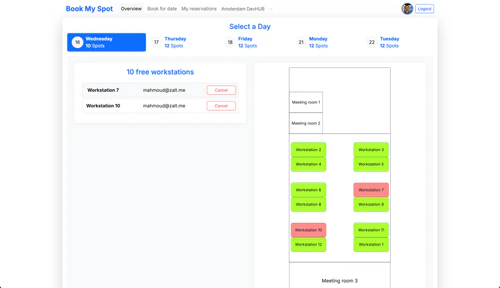
  • ST Booking Manager (December 2024 – January 2025) [Web App]. An internal employee-only workspace reservation system for booking desks and meeting rooms across multiple office locations. The application provides a visual floor plan where employees can browse av... Technologies: ReactJS, Radix UI, Tailwind CSS, TypeScript, NodeJS, MongoDB, HTML, CSS.
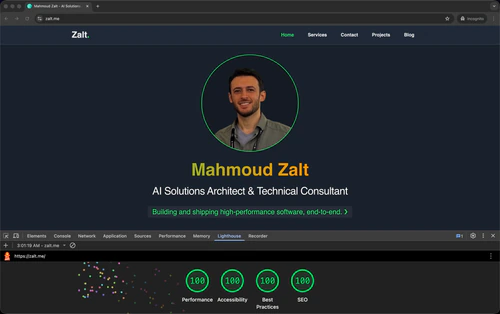
  • Zalt Portfolio v7 (December 2024 – January 2025) [Website]. The current iteration of the personal portfolio, built around a central technology-inspired aesthetic. The design focuses on a refined user experience, featuring entirely custom-invented UI components... Technologies: ReactJS, NextJS, Tailwind CSS, TypeScript, CloudFlare, AWS, GitHub Actions, Git.
  • Awesome Topics Repo (August 2024 – September 2024) [Knowledge Base Repository]. A curated list of software engineering topics explained concisely for all levels. Covers core CS, backend, frontend, infrastructure, data, and more. Open to community contributions. I share this to... Technologies: Markdown, Git. Source code
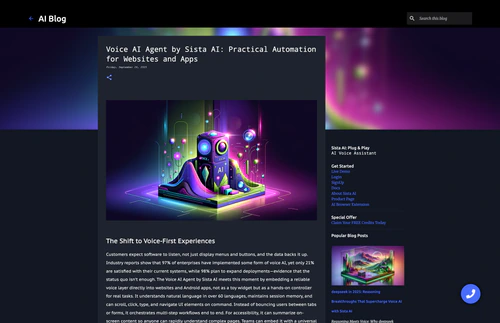
  • Sista Blog (May 2024 – June 2024) [Website, Blog]. A fully automated blog platform leveraging content automation and workflow orchestration. The entire content pipeline is automated, from drafting and AI processing to publishing, creating a seamless,... Technologies: Google Blogger, Perplexity, OpenAI, AWS, Make Automation. Visit project
  • ST Lux (March 2024 – July 2024) [E-commerce Platform]. ST Lux is an exclusive e-commerce platform (for a mall) tailored for the discerning customer, specializing in the sale of luxury clothing, jewelry, and high-end accessories. The platform is uniquely p... Technologies: Python, PostgreSQL, NextJS, FastAPI, Prometheus, Grafana, RabbitMQ, Elasticsearch.
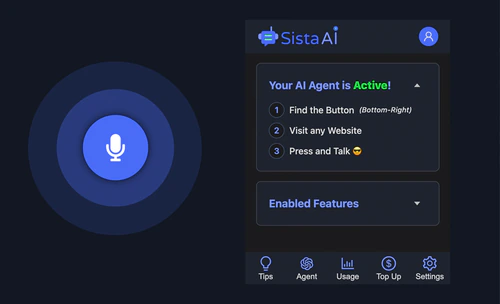
  • AI Browsing Assistant (February 2024 – October 2025) [Browser Extension]. A browser extension that brings voice control and AI-powered assistance to your web browsing experience. This tool transforms how you interact with websites by enabling natural language commands and a... Technologies: Plasmo, Ant Design, OpenAI, TypeScript, ReactJS, LangChain, PineconeDB, PostgreSQL. Visit project

View all 98 projects with filtering and search at https://zalt.me/projects
Thanks for stopping by. Below is a collection of 98 public projects I've worked on since 2010. Each one was a step in my journey, and every one taught me something new.
View Controls
Filters

Page 1 of 2 · 98 projects ·
AI Agents Workforce - Enterprise Platform, Agent Orchestration project
98
Featured

AI Agents Workforce

For Sale

Enterprise Platform / Agent Orchestration

January 2026 - Present

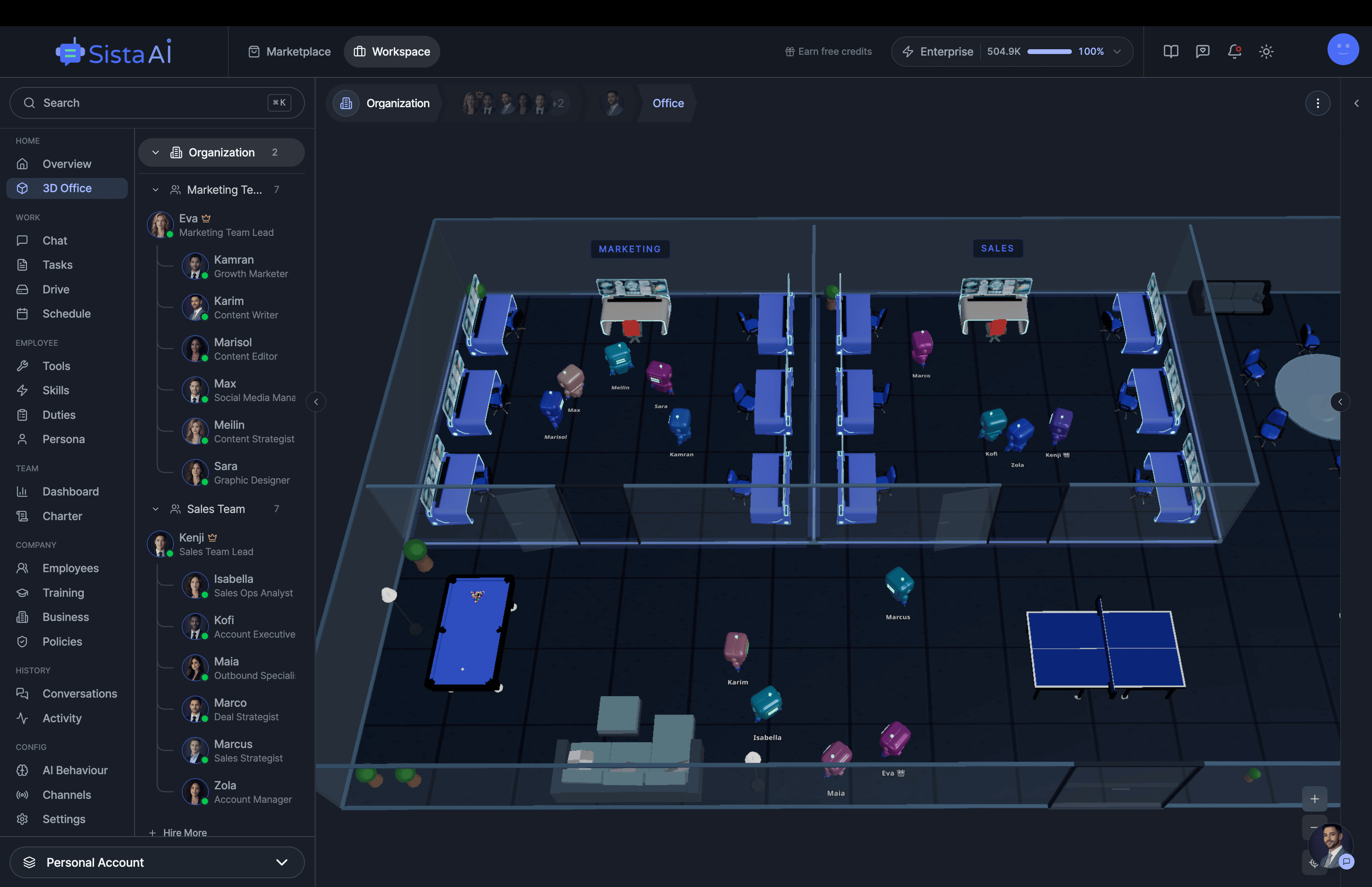
An enterprise-grade multi-tenant SaaS platform for deploying and managing AI agents at scale. Agents execute on a durable workflow engine with long-term memory backed by knowledge graphs and vector search, connect to 900+ external tools via OAuth, and interact through voice and text across web and desktop. Full billing, analytics, and admin built in. Orchestration: Agents run on a durable workflow engine with priority queuing, retries, pause/resume, state recovery across failures, and idempotency on critical mutations. Each agent maintains a long-lived entity workflow that serializes incoming work by channel priority, so a live user message always preempts a background schedule. Full context awareness is injected on every interaction including agent identity, state, capabilities, and team context. Agent Memory: Six memory layers stacked from immediate to long-term: thread-scoped conversation state, a structured work journal logging every action and delegation, self-curated agent notes where agents write their own observations and preferences, a bi-temporal knowledge graph that ingests every conversation into entities and relationships with validity tracking so newer facts automatically supersede outdated ones, a company knowledge graph built from ingested documents and connected data sources, and cross-agent delegation context for team knowledge transfer. Memory is adaptive: when facts change, agents revise their understanding rather than stacking contradictions. Agents learn from their own work outcomes and carry lessons forward. Agents interact with their memory through dedicated search and recall tools, and can explicitly mark information to learn and remember. Knowledge Retrieval & Training: A multi-stage search pipeline enriches queries with speaker context and recent keywords, anchors results to relevant entities in the graph, and falls back to broadened queries on zero results. A training system ingests data from file uploads, shared links, and third-party platforms like document stores, knowledge bases, and messaging tools through entity extraction and embedding generation, building a tenant-isolated knowledge base across graph and vector databases. Both agent memory and trained knowledge merge into a unified context block on every interaction. Work Management: Chat-first interface with inline file uploads. Task boards per agent for tracking work, user-assigned or agent-created during execution. Recurring schedules on any cadence, created by users or agents. Team-level goals, KPIs, and mission text that drive autonomous prioritization. Per-skill and per-tool approval gates where agents pause for human sign-off. Structured work journals where agents log what they did, learned, and plan to do. Drive: Every agent has a personal drive storing all work output: reports, documents, images, spreadsheets, code, and generated artifacts. Browsable, previewable, downloadable, and editable. Work lives in the drive, not buried in chat. Multi-Agent Collaboration: A delegation system lets agents invoke teammates as subagents with full context transfer, and delegation results flow back into the conversation timeline. Organization-level routing directs broad requests to the right teams. Teams behave like real departments: the leader coordinates, delegates to specialists, and assembles outputs. Visual drag-and-drop org structure management. Built-in web search gives agents access to live information. Safety & Governance: Prompt injection detection, output evaluation, PII redaction, topic control policies, and execution guardrails with cost alerts. Human-in-the-loop approval gates let agents pause for authorization on high-risk actions. Permissions and roles with admin, manager, and viewer access levels. Agent leaderboard ranking by productivity, cost efficiency, and output. Import and export for portable agent configurations. All policies are tenant-configurable. Observability: Real-time activity timeline with correlation IDs across agent chains, self-hosted LLM tracing with prompt inspection and token metrics, structured work journals aggregated across teams, and email and in-app notifications when work completes or needs attention. Voice & Channels: Full-duplex voice streaming feeds into the same agent pipeline as text. A unified dispatcher funnels all input channels (web chat, voice, API, webhooks, scheduled triggers, Slack, WhatsApp, Telegram, email, phone/video, and cross-agent delegation) through one entry point, keeping the execution layer fully channel-agnostic. Per-agent channel configuration. Office View: A 3D virtual office showing the entire organization at a glance, with a 2D fallback based on browser or device capabilities. Agents at desks, real-time status reflected visually, delegation shown as handoffs between team zones. Click any agent to jump into their workspace. Desktop Companion: A lightweight desktop app giving agents access to the user's browser and computer: reading screens, clicking buttons, filling forms, navigating applications, and operating software without APIs. Voice or text control. LLM Routing & Billing: Multi-provider model routing across three AI providers with per-agent overrides including model selection from cheaper models for routine tasks to reasoning models for complex work. Local model inference for development and end-to-end testing without external API costs. Streaming thinking tokens. Tiered credit billing consumed across LLM usage, compute runtime, workflows, tasks, and voice minutes with multi-threshold quota alerts and per-message cost breakdown. Usage-based pricing across Starter, Premium, and Enterprise tiers. Referral credit system. Marketplace: Platform-curated and community-published agents, teams, and skills available for hire or cloning. Cloned configurations are independent copies with full customization. Creator incentive system with credit rewards tied to clone usage and attribution tracking. Integrations: Over 850 external tool integrations via MCP with OAuth connection management, cached tool schemas, health checks, and an app recommendation engine that suggests relevant capabilities when tools are connected. Existing agents and workflows can be imported as outsourced employees or connected via MCP to collaborate with teams. The platform is accessible from web, desktop, mobile, browser extensions, and third-party platform apps (Slack, Teams, Discord, Shopify, WordPress, Zapier), with an embeddable widget, client SDKs, and a CLI for programmatic access. Storage: Eight database layers working together in a GraphRAG architecture. Relational for transactional data, workflow state, chat history, and billing. Graph for structural context where entities and their relationships are traversed with temporal validity windows. Vector for semantic retrieval that finds relevant knowledge by meaning. In-memory for caching, session management, WebSocket channel layers, and task brokering. Columnar for high-volume LLM trace analytics. Object storage for file uploads, generated artifacts, and blob data. Time-series for cluster and application metrics. Log aggregation for centralized container log collection. Graph and vector databases index the same entities in different formats and are searched in parallel, merging results into a unified context block. Architecture: Plugin-based modular codebase following ports and adapters. Each feature is an isolated module. Cross-module communication through an event bus, external services behind swappable adapter interfaces. Input and output channels use matching adapter registries, so adding a new channel requires only a new adapter with no changes to agent logic. User Interface: Responsive, accessible web and mobile-first interface with a modern design system and intuitive UX. Built with React and TypeScript over a GraphQL API. WebSocket subscriptions drive token-by-token streaming, live activity feeds, status transitions, delegation visibility, and reasoning token display for chain-of-thought models. Dual streaming channels ensure resilience. Full component library with isolated visual testing. The monorepo shares packages across frontend and backend with build caching and dependency graph-aware task execution. Security & Testing: Row-level multi-tenancy enforced at the ORM, parameterized queries, CSRF protection, rate limiting, and agent-side prompt injection detection. Social OAuth sign-in, two-factor authentication, and transactional email delivery. Product analytics, error tracking, and performance monitoring across frontend and backend. Payment integration with webhook sync and subscription management. Full-stack automated testing from unit through end-to-end browser automation against real LLM responses, with explicit tenant isolation verification. Infrastructure & DevOps: Over 20 containerized microservices orchestrated across development, staging, and production. Entire infrastructure defined as code with automated cluster provisioning, VM image builds, and declarative release management. Five CI/CD pipelines covering linting, testing, image builds, and deployment with auto-deploy to staging on merge and manual production gates with confirmation. Autoscaling on workflow queue depth. Cloud provider is swappable: four providers supported (three cloud, one local simulation) with the ability to add more by plugging in a new module. A full local Kubernetes environment simulates production inside Docker for infrastructure testing without cloud costs. Zero-downtime rolling deployments with single-command rollback.

Private Stack
View Details
ST Lux - E-commerce Platform project
80

ST Lux

March 2024

E-commerce Platform

ST Lux is an exclusive e-commerce platform (for a mall) tailored for the discerning customer, specializing in the sale of luxury clothing, jewelry, and high-end accessories. The platform is uniquely positioned to serve both online shoppers and in-person clients through its network of luxury malls. This dual approach allows ST Lux to offer integration between digital and physical shopping experiences, providing customers with the option to have items delivered to their homes or picked up in-store, ensuring a personal touch that is essential for luxury brands. The complexity of operating ST Lux lies in its strict adherence to the rigorous standards and regulations demanded by top-tier luxury brands. Each product listing is carefully curated to comply with brand guidelines, including specific requirements for imagery, typography, and overall design aesthetics. These stringent standards ensure that ST Lux maintains the exclusivity and prestige associated with the brands it represents. ST Lux also navigates the intricate logistics of managing both online and offline sales, which includes coordinating inventory across multiple physical locations and ensuring consistency in customer service. The platform's backend systems are designed to handle the complexities of luxury retail, including special packaging, customized delivery options, and adherence to brand-specific requirements for in-store displays and online presentation. Finally, ST Lux is committed to offering an exceptional customer experience. This commitment is reflected not only in the high-quality products available but also in the platform's attention to detail in every aspect of the shopping process. From the ease of browsing luxury items online to the convenience of in-store pickup, ST Lux ensures that customers receive a level of service befitting the luxury market.

PythonPostgreSQLNextJS+13
VS Marketplacer - Website, CMS, API project
54

VS Marketplacer

March 2018

Website, CMS, API

VS Marketplacer is a unique service that offers a simple and efficient way to manage your products across multiple marketplaces. By interacting with its API, you can accomplish two primary tasks with ease. The first task is creating products on multiple marketplaces simultaneously. All you need to do is make an API call with the necessary product information and indicate the marketplaces you wish to target (Amazon, eBay, Shopify, Alibaba, and Teespring) as well as specific details such as your Amazon store name. Our service will handle the rest, creating your products on all the relevant marketplace sites quickly and efficiently. The second task involves pulling all orders of your products from the various marketplace databases and sending them to another system, POMS. This feature is especially useful for several reasons, such as streamlining the order fulfillment process and ensuring that all order data is collected in one central location for easy management. With Marketplace Hub, managing your products across multiple marketplaces has never been simpler. Our API allows you to easily create products on all your desired marketplaces and centralize your order data, enabling you to focus on growing your business without worrying about the intricacies of marketplace management. Overall, Marketplace Hub is a reliable and effective solution for businesses seeking to expand their reach across multiple marketplaces while simplifying their operational processes.

LaravelMongoDBGraphQL+9
Showing 1-54 of 98 projects
Let's Build Something Amazing Together

Bring your vision to life with expert software development. I create scalable, production-ready solutions that deliver measurable business impact.

Full-Stack Development
Production-Ready Code
Business-Focused Solutions