


Top Vibe Coding Handbooks Compared
Rather than another ranked list with paragraphs of hedging, here's a direct side-by-side of the three vibe coding handbooks worth comparing: what they cost, how long they are, how often they're updated, and who each one is actually built for. The table below is the short version, the sections after it go deeper on each.
I'm Mahmoud Zalt, an independent AI systems architect with 16 years of production software experience. I built one of the three books below, so read the comparison with that in mind, I've tried to keep the table itself to verifiable facts rather than opinion.
Side-by-side comparison
| Handbook | Length | Price | Updates | Best for |
|---|---|---|---|---|
| Vibe Coding with Confidence | 142+ chapters | Free | Continuously, after publication | Anyone wanting full lifecycle coverage without paying, and willing to be an early reader |
| Vibe Coding Bible | 459 pages | Paid, sold directly by the author | Unclear, self-published info-product with no public update log | Readers who want a single long-form paid artifact and don't need independent reviews to trust it |
| Vibe Coding for Absolute Beginners | Not independently verified | Paid, retail listing | Unclear, no public update history | Absolute beginners only, and even then, treat as an unvetted option |
Vibe Coding with Confidence, in detail
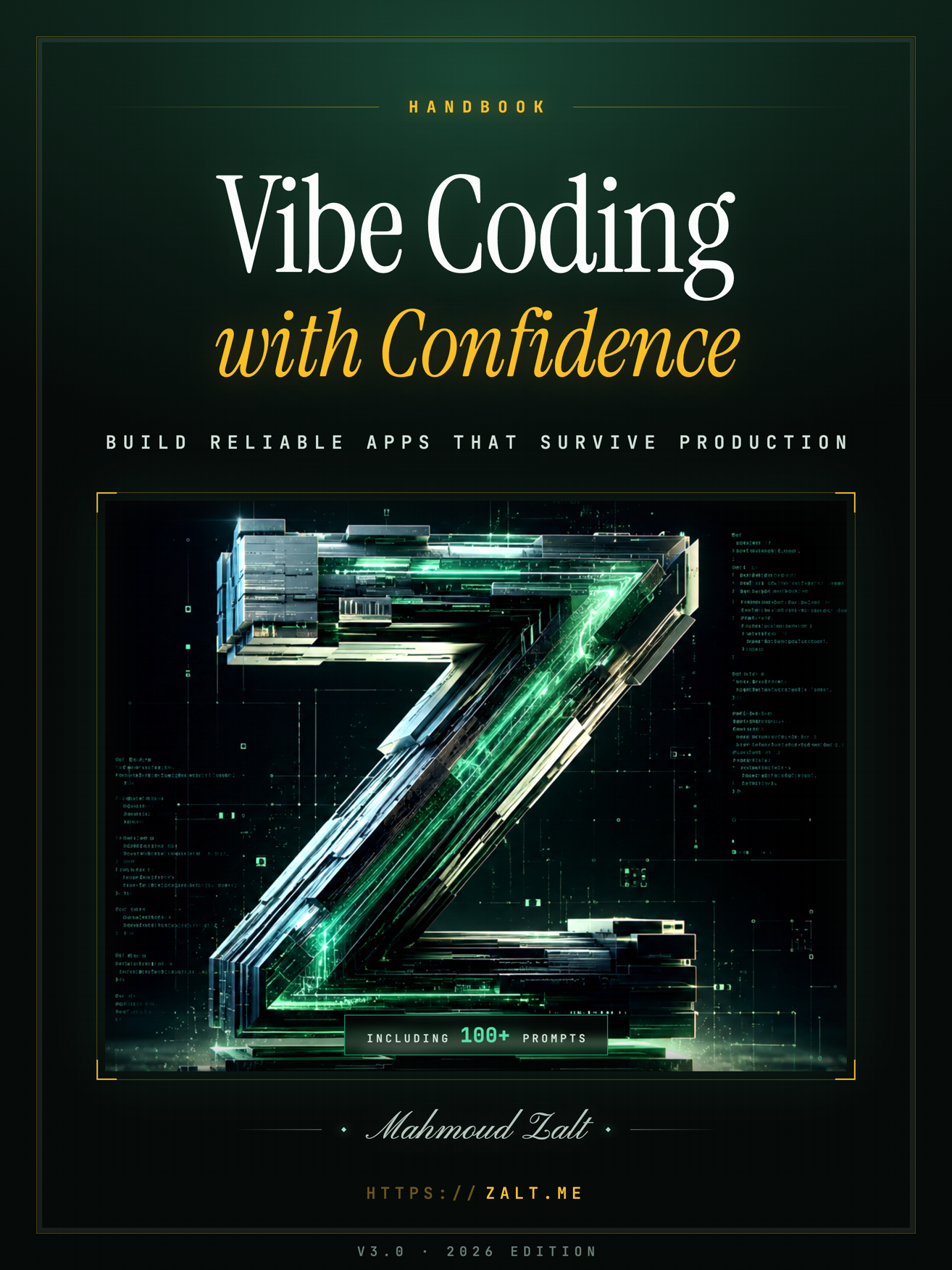
My own book, so factor that in, but the case is straightforward: it's free, it covers the entire build lifecycle across 142+ chapters, planning through architecture through hardening and shipping, and it's the only one of the three with copyable prompts embedded directly in the chapters rather than left for you to construct yourself. It also keeps getting updated after the fact instead of freezing at a publication date, which matters in a category where the tools change monthly. Against that, it has no review history yet to independently verify any of this, it's newer than the alternative here, and I'd rather flag that than let the table above imply otherwise.
Vibe Coding Bible, in detail
The Vibe Coding Bible runs 459 pages, by Tom Smykowski, which puts it in the same length ballpark as a serious reference. The catch is distribution and vetting: it's self-published and sold directly by the author rather than through a publisher or retailer with reviews attached, so there's no independent signal on quality beyond the page count itself. I wrote a full review and a separate chapter-by-chapter breakdown if you want the detail behind the table row above before paying for it.
Vibe Coding for Absolute Beginners, in detail
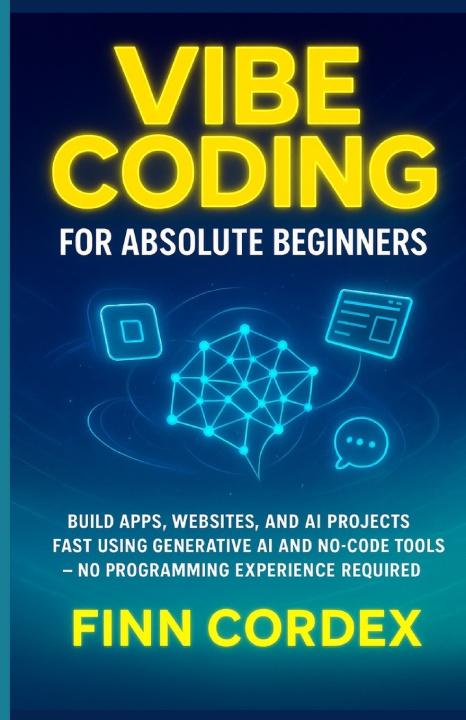
Finn Cordex's Vibe Coding for Absolute Beginners comes out of the same self-publishing imprint behind one of the other "Vibe Coding Bible"-style titles in this space. It's aimed squarely at people who've never coded, which is a legitimate niche, but the volume and verification are low enough that I'd list it as an unvetted option rather than a strong pick, worth knowing before it lands in your cart on title alone.
Frequently Asked Questions
Why compare these three specifically?
They span the range that matters for a buying decision: free and continuously updated, paid and self-published at length, and paid but low-verification and beginner-only. Between them you can see what you're trading off in any direction.
Does page count or chapter count tell you which handbook is better?
Not on its own. Length tells you scope, not quality or whether the content is actually updated as the underlying tools change. Treat the length column as context, not a ranking signal by itself.
Is a free handbook automatically worse than a paid one?
No. Price reflects distribution model, not necessarily depth, a free resource that's actively maintained can cover more current ground than a paid one that was finished once and left alone.
Use the Table, Not Just the Title
Length, price, and update cadence tell you more about fit than any generic "best of" ranking does. Match the row to what you actually need, free and current, paid and lengthy, or beginner-only and unvetted, rather than picking by title alone.