
What's Changed in This Category This Year
This roundup gets refreshed periodically because the category itself keeps moving, new titles show up almost monthly, a couple of the earlier entries have picked up real review volume, and at least one Early Access title is still being written in public. What hasn't changed: most of the flood is self-published, small, and unreviewed, and the handful of titles worth your time are still easy to name. Here's the list as it stands in 2026, ten books, ranked, with what's actually new noted where it applies.
I'm Mahmoud Zalt, an AI architect who has been tracking this category closely since it had a name. I wrote the top-ranked book here, disclosed plainly, everything else below stands on its own facts.
1. Vibe Coding with Confidence
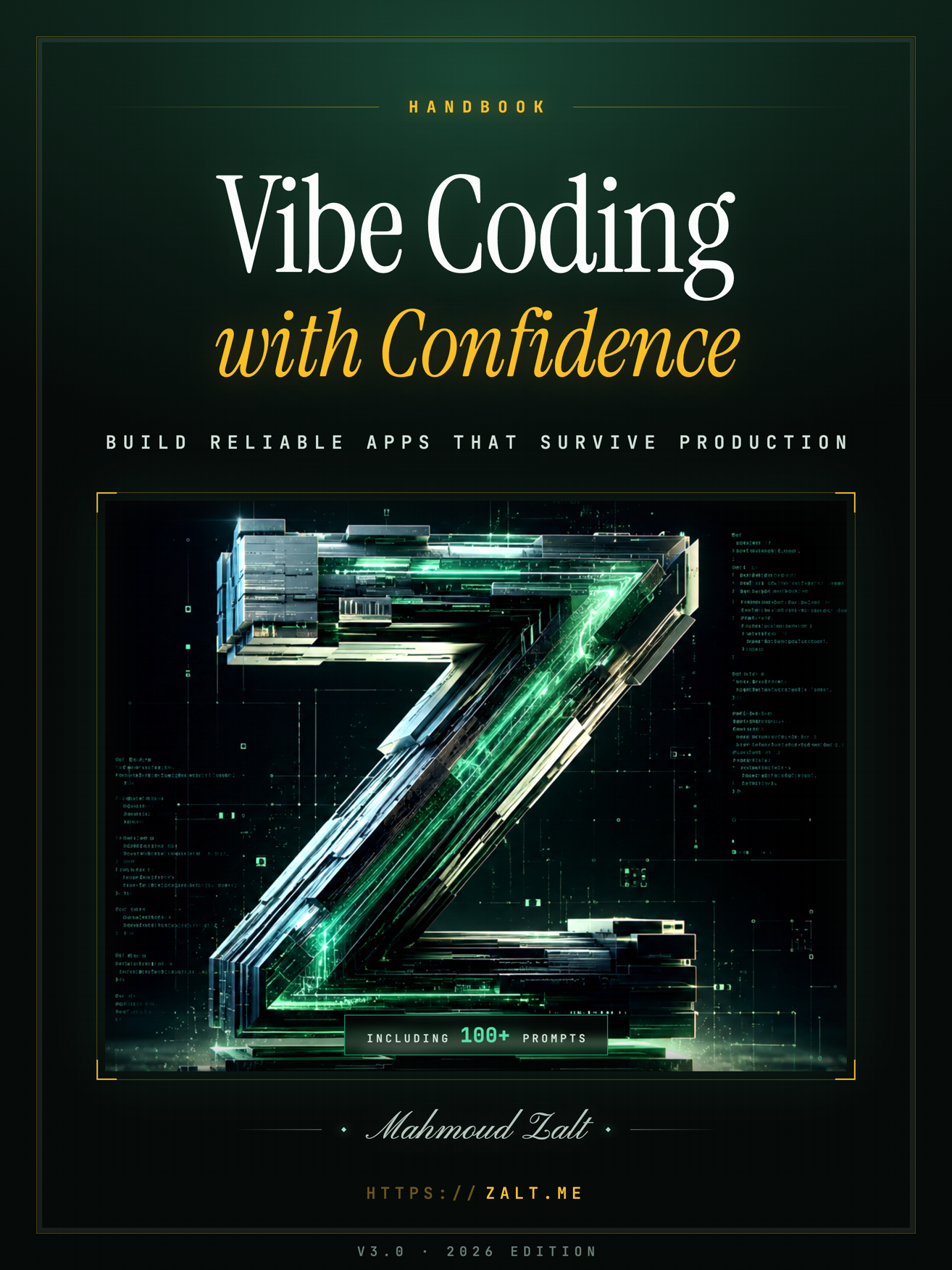
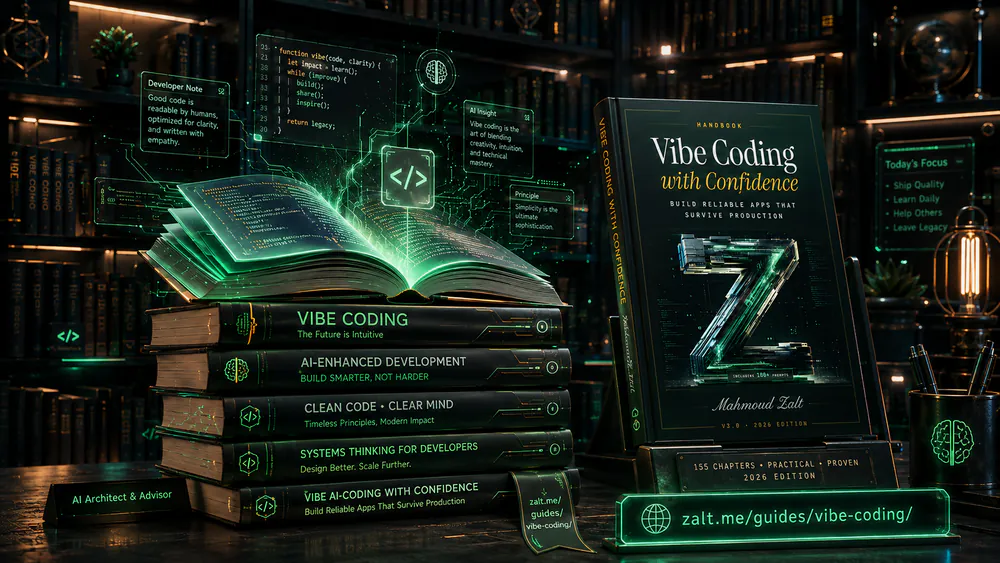
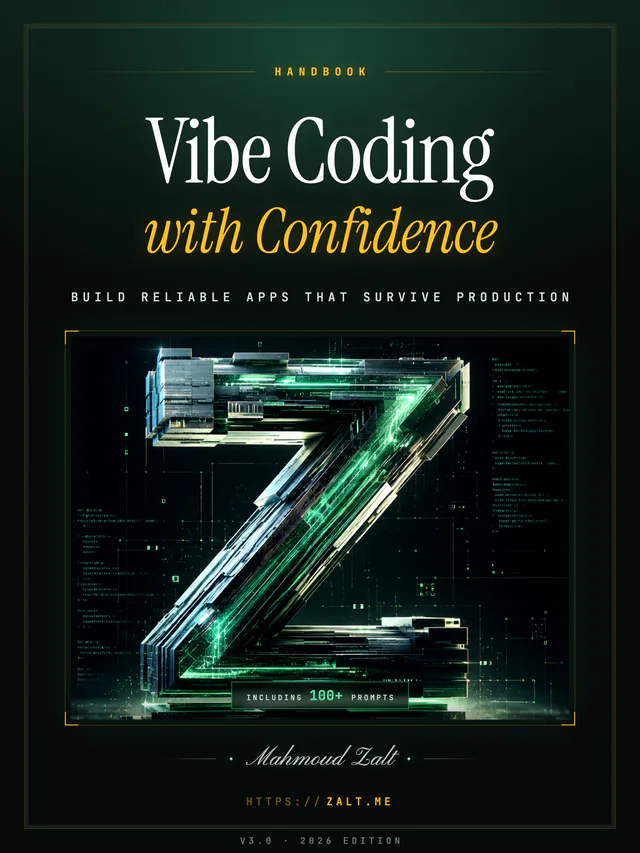
Still the top pick going into 2026 for a straightforward reason: it's the only entry that keeps getting updated rather than sitting frozen at a publication date. It's free, spans the entire build lifecycle across 142+ chapters, planning through hardening and shipping, and it's the only book here with copyable prompts built in. Read it at zalt.me/guides/vibe-coding. It will not turn you into an engineer, but it will help you understand what needs attention, which decisions you can make yourself, and when to bring in technical help, especially if you do not come from a technical background.
2. Vibe Coding by Gene Kim & Steve Yegge
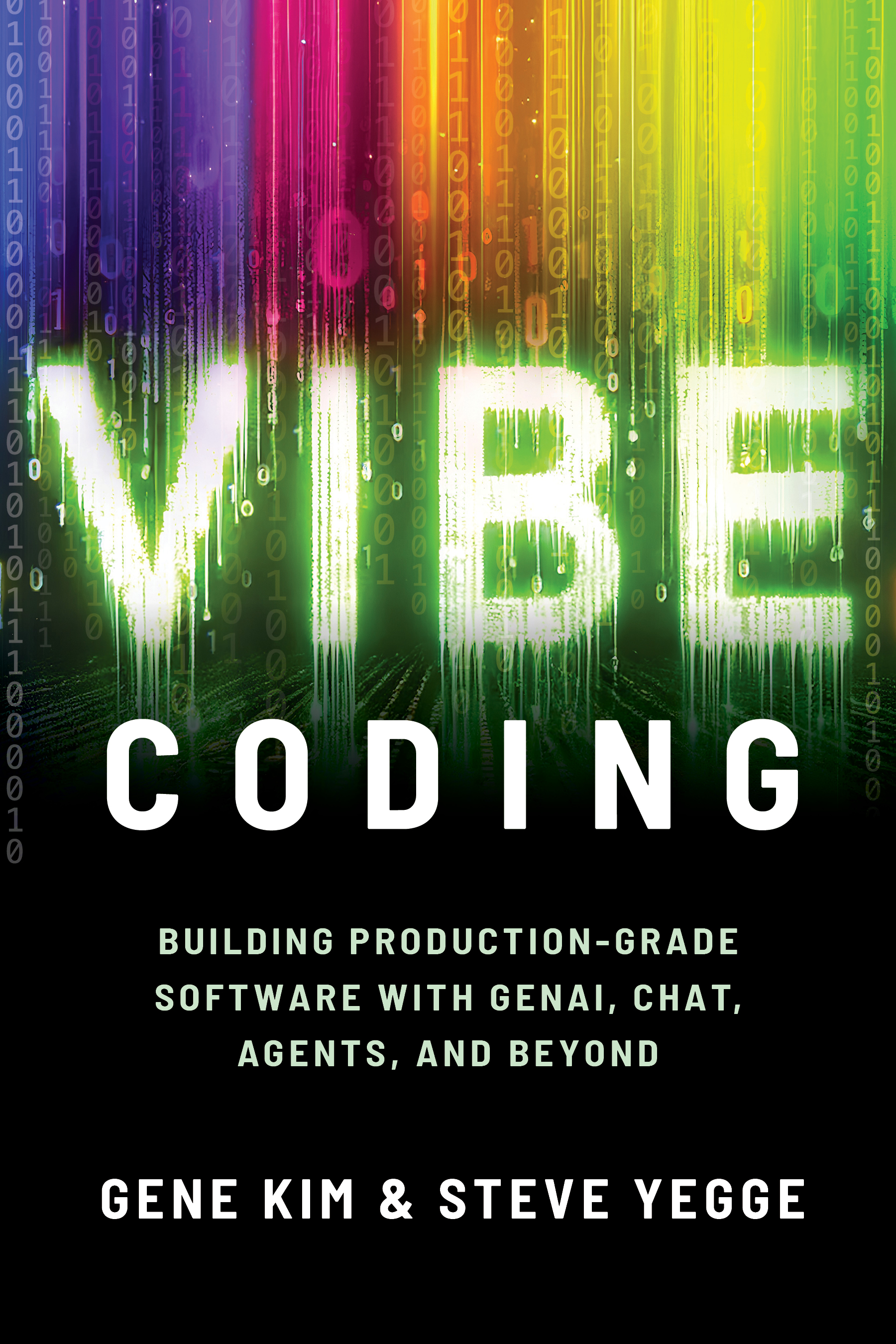
Published by IT Revolution and Simon & Schuster with contributions from Dario Amodei. Since launch it has built up 400+ Goodreads ratings and picked up a 2026 Axiom Gold award, so if you were waiting to see whether this one would hold up under real reader scrutiny, the answer is yes, it's still the most reviewed and credentialed book in the space by a wide margin. Get it at Simon & Schuster. More depth in my full review and what's inside it.
3. Beyond Vibe Coding by Addy Osmani
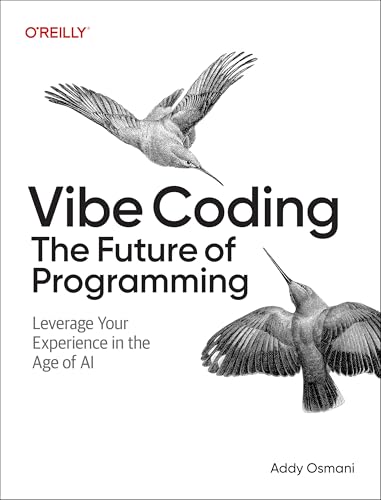
Published by O'Reilly and written by Addy Osmani, who leads Chrome Developer Experience at Google, this is the strongest pick for a working developer, tech lead, or engineering manager. Its core argument is that AI can produce a first draft, but the human remains responsible for review, testing, security, and maintenance. That makes it a useful corrective to hands-off AI hype, although it is not a first-project tutorial for non-technical founders. Read it at O'Reilly, or see the full review.
4. Vibe Engineering by Tomasz Lelek & Artur Skowronski
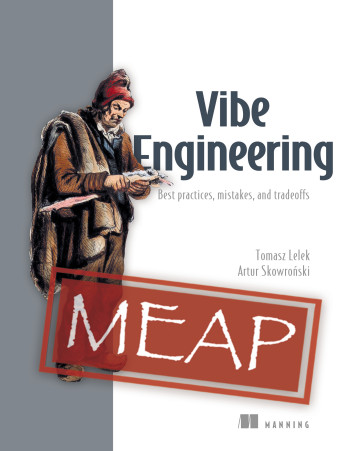
The one genuinely new entry worth flagging this update is a Manning Early Access title, still being written chapter by chapter. It is building a provider-agnostic framework for keeping AI-assisted changes small enough for a human to review, which makes it relevant to engineering teams that need a shared process rather than a solo-builder shortcut. The important caveat is that it is mid-release: useful to follow if that is your problem, but not yet a finished recommendation. Track it at Manning.
5. The Vibe Coding Playbook by Siraj Raval
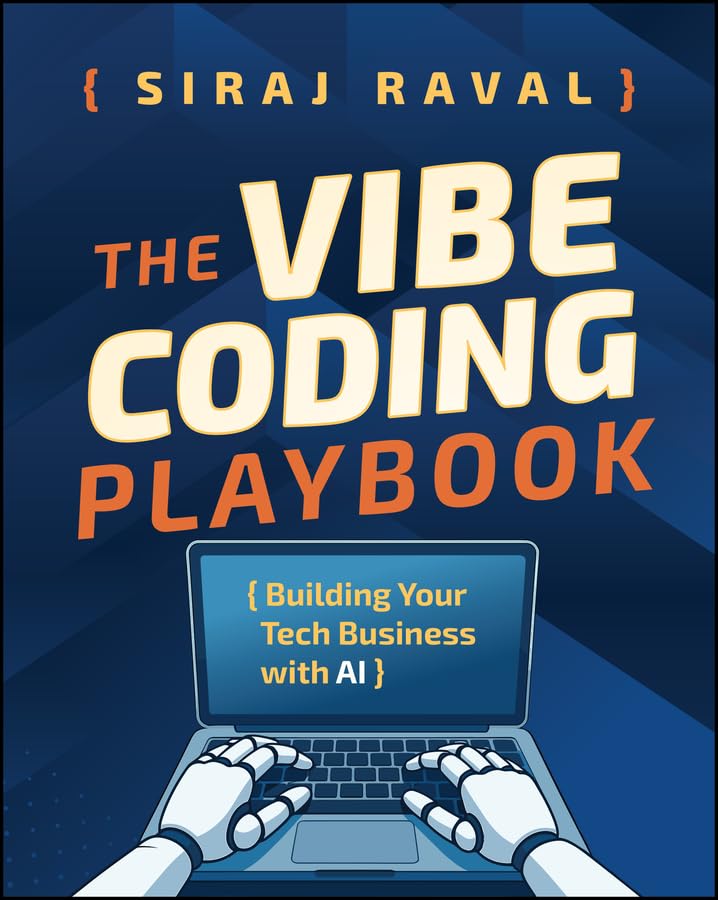
Published by Wiley, this is the business-first choice for a non-technical founder treating AI as a technical co-founder. It gives real attention to problem selection, validation, positioning, pricing, and growth, so it is useful before you invest heavily in an idea. The trade-off is deliberate: its build guidance is lighter than its business guidance, and it is not enough on its own for the engineering decisions that matter once customers depend on the product. Get it on Amazon, or read the full review.
6. Vibe Coding Bible by Tom Smykowski
This 459-page, self-published guide is sold directly by the author at vibecodingbible.org rather than through a traditional publisher. Its practical appeal is breadth: prompt patterns, debugging and refactoring workflows, full-system design, and reusable templates for people already working with tools such as ChatGPT, Claude, or Copilot. Treat it as a large practitioner reference rather than a beginner curriculum. It also has no substantial independent review base as of this update, so judge the claims with that limitation in mind. Read the full review and what's inside before buying.
7. Vibe Coding by Example by H. Peter Alesso
H. Peter Alesso's self-published title is part of a wider AI book series and has a real retail listing, but it remains lightly reviewed. The example-led framing makes it a reasonable supplementary option if you learn best by seeing individual ideas applied, rather than a primary resource for planning and shipping a complete product. Nothing material has changed since it entered the category, and there is still too little independent feedback to rank it higher with confidence. See it on Goodreads.
8. Vibe Coding for Beginners Made Easy by David M. Patel
David M. Patel's self-published guide is genuinely aimed at absolute beginners who want to move from an idea to a first app quickly. That narrow focus is its strength: it can be a gentler on-ramp than an engineering book that assumes you already know the vocabulary and workflow. It is not a deep reference for technical decisions, production hardening, or running a team, so use it to get oriented and then add more rigorous material before you ship anything important. Its independent review base remains tiny. See it on Goodreads.
9. Vibe Coding with Cursor, Windsurf, and Lovable (Packt)
Published by Packt, this book is intentionally scoped to three named tools, Cursor, Windsurf, and Lovable, rather than the discipline broadly. That is useful when your team has already committed to one of those tools and wants instructions tied to the screens and workflows it will actually use. It is a weaker first purchase if you are still comparing platforms or want principles that survive a tool change, because the tool choice is central to the book. Details are at this listing.
10. Anyone Can Vibe Code by Marcus Valen
Marcus Valen's self-published book makes a zero-to-hero pitch for people who have never coded. That can be appealing if you need permission to start, but the book is sold mainly through secondary marketplaces such as eBay rather than standard retail, and there is no independent review base to use as a quality signal. Keep expectations modest and treat it as a low-stakes introduction, not a foundation for technical or business decisions that will be expensive to reverse. It is listed on eBay.
Watch Out for Lookalike Titles
One thing worth flagging for anyone browsing this category in 2026: a title called Vibe Coding Mastery, credited to "Genne Yegge," has started showing up in searches. That name sits suspiciously close to Gene Kim and Steve Yegge, the real authors of book #2 above, and there's no evidence of any real connection between them. Treat that as a warning about lookalike titles trying to borrow credibility, not as a recommendation either way.
The 2026 Bottom Line
The category has grown, but the shortlist that actually matters hasn't grown nearly as fast. Start with the free full-lifecycle option, then branch based on your specific gap.