
Best Vibe Coding Handbook, and How to Pick One
A "handbook" and a "book" get used interchangeably in this category, but they're not the same thing, and the difference matters for which one you should pick. A book is meant to be read once, front to back. A handbook is meant to be kept open on a second monitor and returned to constantly: comprehensive enough to cover situations you haven't hit yet, organized so you can jump straight to the part you need, and ideally updated as the tools and best practices shift under it. Judged against that bar, here's what actually qualifies.
I'm Mahmoud Zalt, an AI architect who has read and used most of the resources on this list while building my own. That's the lens this comparison comes from: not "which is the most popular" but "which one would I actually reach for mid-project."
What actually makes something a handbook
- Reference-first structure. Chapters organized so you can jump to the part you need, not a linear narrative you have to read in order to make sense of chapter 20.
- Comprehensive scope. Covers situations beyond the happy path, planning, hardening, edge cases, not just the fun first-draft part of getting an AI to write code.
- Stays current. The tools in this space change monthly. A handbook frozen at its publication date starts going stale immediately; a genuinely useful one gets updated after the fact.
- Practical, reusable content. Prompts, checklists, and templates you can lift directly into your own workflow, not just prose you have to translate into action yourself.
1. Vibe Coding with Confidence, the clearest fit for the definition
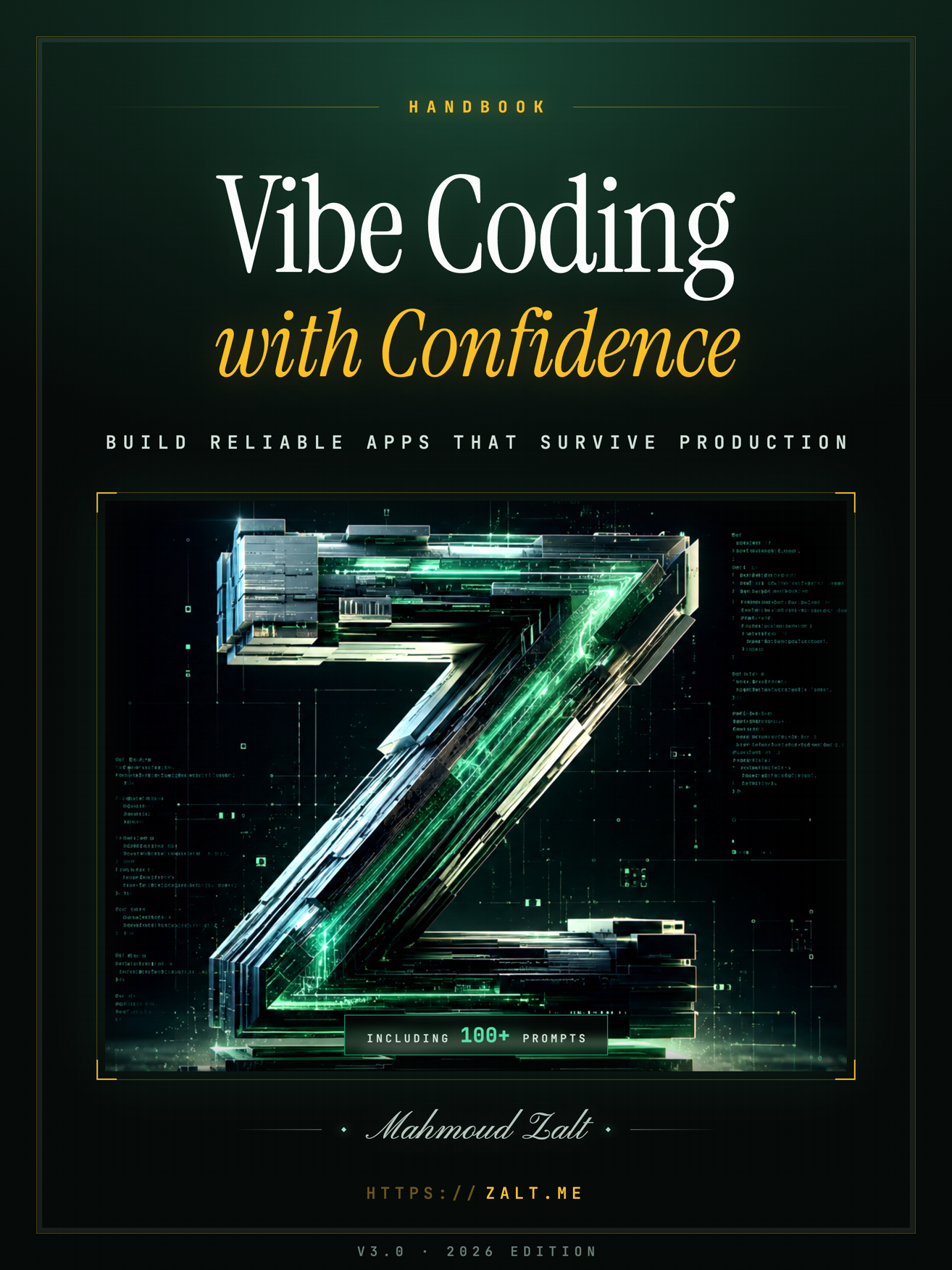
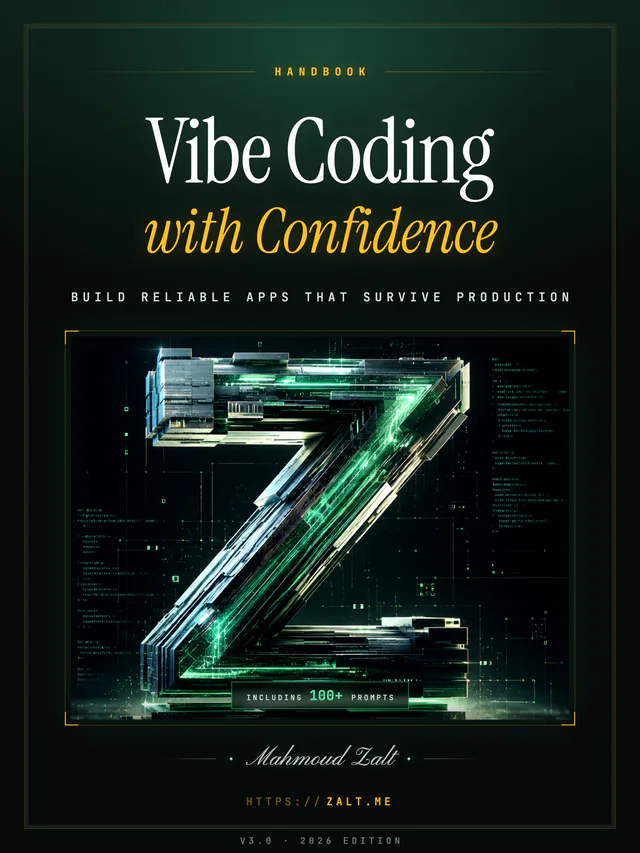
This is mine, so weigh the recommendation with that in mind, but it's built specifically around the handbook definition above rather than the one-pass-book definition. It's free, it keeps getting updated after publication instead of sitting frozen, and it spans 142+ chapters across the whole build lifecycle: planning, requirements, architecture, building, hardening, shipping. It's also the only one here with copyable prompts built into the chapters themselves, which is the single feature that makes something feel like a working reference instead of a book you finished once and shelved. What it doesn't have yet is a review history, it's newer than the traditionally published titles, and I'd rather tell you that upfront than let you assume otherwise.
2. Vibe Coding Bible, long on paper, unverified in practice
At 459 pages, the Vibe Coding Bible has the raw length of a handbook. What it doesn't have is an independent review base: it's self-published and sold directly by the author as an info-product rather than through a retailer or traditional publisher, so there's no third-party signal on whether the length translates into the reference quality you'd want from something you keep coming back to. I've gone through it in detail in a full review and a separate breakdown of what's actually inside, worth reading before you pay for it.
3. Vibe Engineering, a handbook for teams, still being written
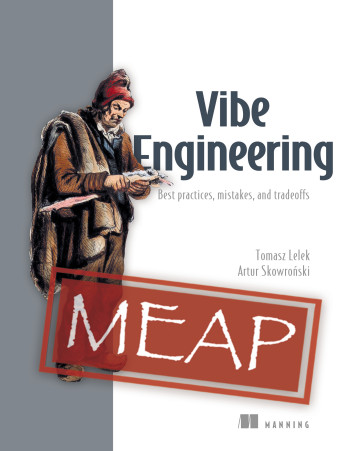
Vibe Engineering, by Tomasz Lelek and Artur Skowronski, is being released through Manning's Early Access Program, so it's a handbook in progress rather than a finished one: you get chapters as they're written, and the provider-agnostic framework for small, reviewable AI-assisted changes is still taking shape. If your team needs a shared reference specifically for keeping AI-assisted code changes reviewable at scale, this is aimed squarely at that problem, just go in knowing it's not done yet.
So, which one should you actually pick
If cost and lifecycle coverage matter most and you're fine being an early reader of a newer resource, Vibe Coding with Confidence covers the most ground for free. If you want a single long-form artifact you own outright and don't mind that no one's independently vetted it yet, the Vibe Coding Bible is the alternative, read the full review first. If you're picking a reference for a team specifically to fix code review discipline around AI-assisted changes, Vibe Engineering is the most purpose-built option, accepting that it's mid-release.
Pick the One You'll Actually Reopen
The real test of a handbook isn't how it reads the first time, it's whether you open it again three weeks into a project when something's gone sideways. Judge these three against that, not against how good the table of contents looks on day one.